For years, creators searched for ways to remove themselves from the camera while still growing profitable channels. First, it was slideshow channels that relied on stock images and text-to-speech voices. Then came faceless narration channels using human voiceovers. After that, AI voice channels entered the scene and dramatically lowered production time.
Now, we are stepping into the next evolution of automation:
AI influencers - fully branded digital personalities that work 24/7, scale infinitely, and monetize across platforms.
This shift is not just another trend. It represents a structural change in how digital content is created, consumed, and monetized. AI influencers do not simply upload videos, they act as recognizable digital figures that audiences return to again and again.
Major creators are already experimenting with AI hosts. Entire faceless YouTube empires are rebranding into virtual personalities. Even brands are now paying for AI avatars that never sleep, age, or experience burnout.
In this guide, you’ll discover:
- What AI influencers really are
- Why they’re replacing classic automation models
- How YouTube’s algorithm actually favors them
- How to build one from scratch
- And how to turn it into a multi-stream income machine
Let’s break it all down.
What Is an AI Influencer?
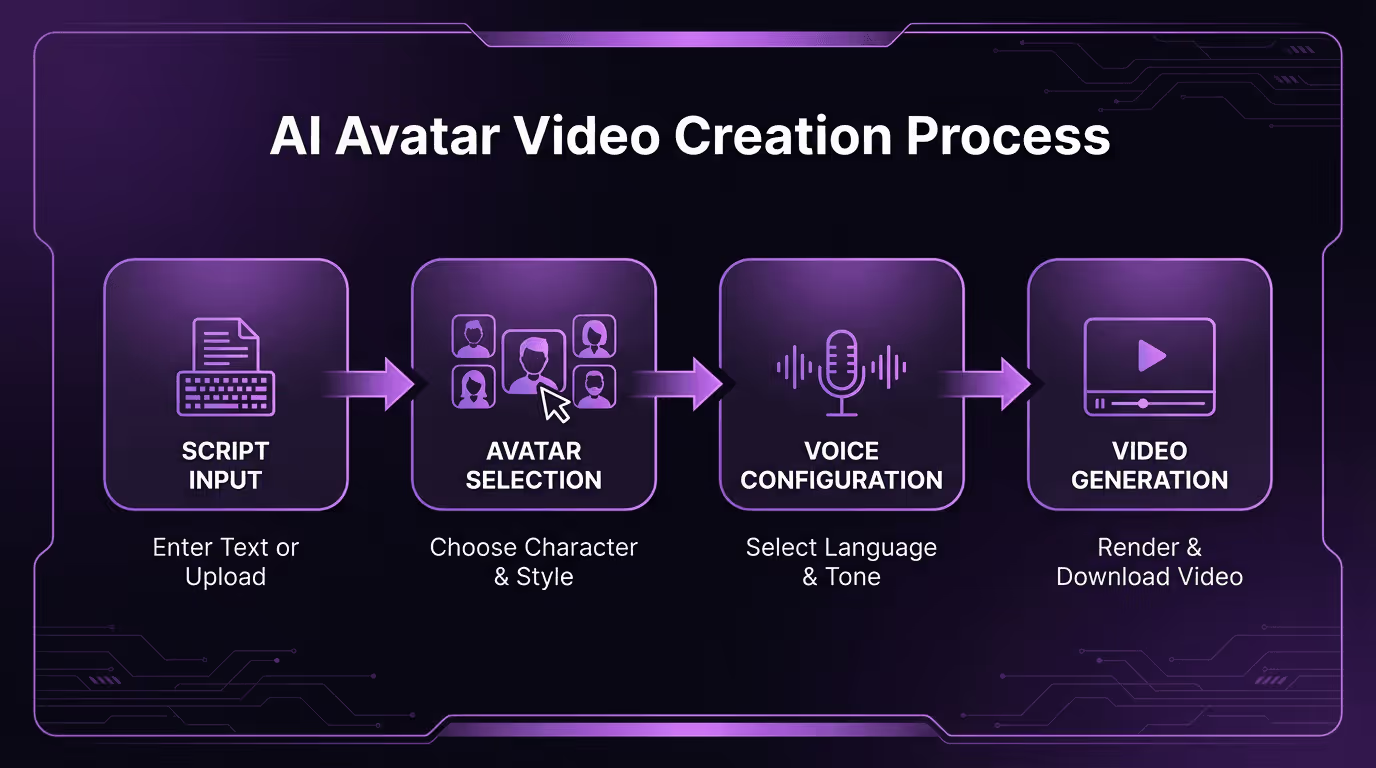
An AI influencer is a virtual digital personality powered by artificial intelligence that creates, narrates, and presents content as if it were a real human. Instead of relying on a hidden creator behind the scenes, the AI itself becomes the recognizable face and voice of the brand.
Unlike basic automation channels that feel generic and disconnected, AI influencers feel like characters. They can express tone, emotion, and personality. Over time, audiences begin to recognize them just like they would a human YouTuber.
AI influencers are not just tools. They are brands with identity, values, and voice.
Unlike traditional channels, they:
- Have consistent identity
- Build audience loyalty
- Can speak, react, and “evolve”
- Become brands, not just content feeds
They are not just pushing videos. They are creating relationships with viewers. People remember the “host,” not just the topic.
Examples include:
- AI news anchors
- Virtual podcast hosts
- AI finance experts
- AI motivation speakers
- AI lifestyle vloggers
- AI gaming commentators
The key difference is personality + continuity.
And YouTube loves that.
Why AI Influencers Are the Next Evolution of YouTube Automation
Traditional automation worked because it removed you from the camera. It allowed people to build channels without showing their face, recording their voice, or even editing their own videos. This was revolutionary for creators who wanted scale without visibility. But over time, faceless automation also created a major weakness: no identity. When viewers don’t recognize a creator, they don’t form loyalty, and when loyalty is missing, growth slows.
AI influencers go one step further.
They remove you from the brand while keeping the human connection.
Instead of building “just another channel,” you build a virtual person that feels familiar, trustworthy, and consistent. Over time, viewers start recognizing the voice, the style, and the message, just like they would with a real YouTuber. This emotional familiarity is what traditional automation could never achieve.
This is why AI influencers are exploding. They solve the biggest weaknesses of automation: lack of identity, weak trust, and low long-term loyalty. Instead of chasing viral videos, you build an asset that compounds. Every video strengthens the character. Every upload increases authority. Every viewer becomes more likely to return.
Here’s why this is the next big boom.
1. The Algorithm Favors Identity
YouTube now prioritizes:
- Session time
- Viewer loyalty
- Semantic recognition of creators
- Trust signals across uploads
In the past, channels were ranked mostly by views and keywords. Today, YouTube tracks how long people stay on the platform, whether they return to the same channel, and whether they binge multiple videos from the same creator. AI influencers fit perfectly into this model.
AI influencers generate these signals naturally because:
- Viewers recognize the “host”
- The voice and face stay consistent
- People return for the character
The algorithm sees this repeated behavior as authority. When a channel shows strong viewer loyalty and session depth, YouTube is far more likely to push it into recommendations, homepages, and suggested feeds. Over time, this creates a snowball effect where each video grows faster than the last.
2. Infinite Content, Zero Burnout
Human creators eventually slow down. They get tired, lose motivation, or simply hit creative walls. Even the most passionate YouTubers struggle to stay consistent for years. Life, stress, and changing priorities all interfere. This is one of the biggest reasons most channels fail, not because the idea is bad, but because the creator cannot sustain the workload long enough to see real momentum.
AI creators never do.
They don’t feel pressure, boredom, or burnout. They don’t skip uploads. They don’t lose confidence. An AI influencer can operate continuously, producing content on demand without slowing down. This changes the entire economics of content creation because consistency is what feeds the algorithm.
You can publish:
- Daily long videos
- Shorts across platforms
- Reels, TikToks, podcasts
All from one AI personality, without fatigue.
This allows you to test dozens of content angles, hooks, and formats simultaneously. Instead of waiting weeks to see what works, you can learn in days. Every upload becomes a data point that improves your future strategy. The faster you publish, the faster you refine. The faster you refine, the faster you grow. This compounding effect is what allows AI-powered channels to dominate niches where human creators simply cannot keep up.
3. They Scale Like SaaS
Once built:
- No salaries
- No schedules
- No creative exhaustion
- No location limits
Your AI influencer becomes a digital asset, not a job. Instead of trading time for views, you are building a system that produces value automatically. This is exactly how software businesses scale: they create once and sell repeatedly. An AI influencer works the same way, every video is a reusable asset that can generate income for months or even years.
It behaves like software because the core system stays the same while the output grows. You can duplicate the model into new niches, new languages, or new platforms without rebuilding from scratch. This allows you to scale horizontally instead of vertically. You are no longer limited by hours in a day. Your growth is now determined by strategy, not effort. This shift is what turns creators into digital entrepreneurs.
The Shift from Faceless Channels to Virtual Brands
Faceless channels are still profitable, but they have a ceiling. Without a recognizable personality, viewers rarely form emotional attachment. They may watch a video, but they don’t remember who created it. This leads to unstable growth and inconsistent income.
Most struggle with:
- No brand recognition
- Low CPM niches
- Audience churn
- Easy competition
Because there is no personality, anyone can copy them. AI influencers solve this by adding:
- Story
- Voice identity
- Visual continuity
- Brand positioning
You are no longer running a channel.
You are running a media company with a digital spokesperson.
This allows you to build long-term trust, attract premium advertisers, and sell your own products. Your audience follows the character, not just the content. That is what creates real brand equity.
How AI Influencers Monetize (Beyond AdSense)
AI influencers don’t rely on one income stream.
They stack them.
Primary Monetization Streams
- Affiliate links
- Digital products
- Coaching funnels
- Sponsorship deals
- Brand licensing
- Community memberships
- YouTube AdSense
- Merch and dropshipping
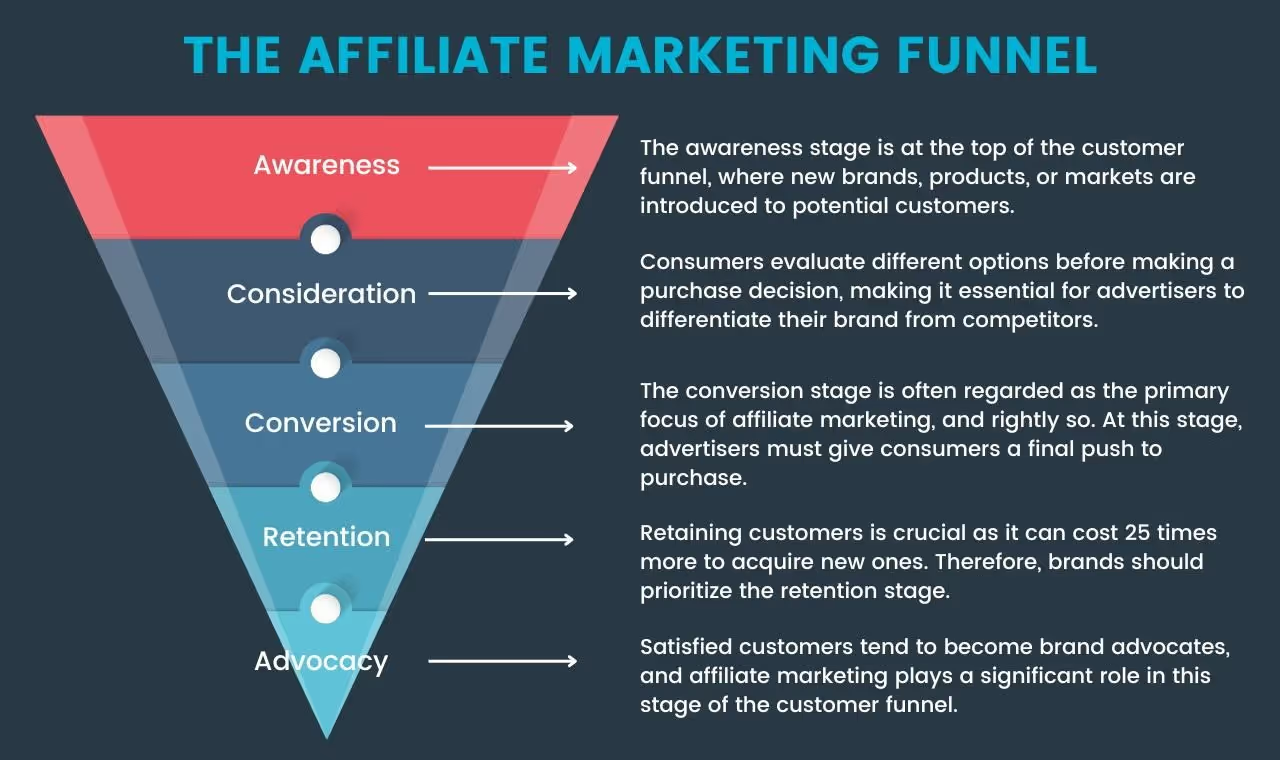
Example Funnel Flow
- AI influencer posts video
- Viewer clicks link in description
- Lead enters email funnel
- Digital product or service sold
- Upsell to coaching or high-ticket offers
This is not a channel.
It’s a business system that compounds over time.