How the YouTube Algorithm Works in 2026: Strategy & Tips
For years, creators believed that subscribers were the key to YouTube success. More subs meant more views. More views meant more money. That era is over.
In 2026, YouTube runs on an entirely different engine, one powered by advanced AI, semantic understanding, and behavior-driven distribution. What you think the algorithm rewards is likely what’s holding you back. The platform is no longer designed around creator growth. It is engineered around viewer behavior, emotional response, and session continuity. Every recommendation is part of a much larger system designed to keep users engaged for longer periods of time across multiple videos, not to promote individual creators.
After analyzing dozens of anonymized client channels (60M+ views across niches), studying every YouTube AI update, and reviewing platform keynotes, one truth is now undeniable: Subscriber count has been completely decoupled from discoverability. Loyalty is no longer the input, it’s the output.
This guide breaks down exactly how the YouTube algorithm works in 2026 and what to optimize instead if you want sustainable growth and revenue. If you understand this shift, you stop chasing empty metrics and start building systems that scale with consistency rather than luck.
What most creators don’t realize is that YouTube no longer behaves like a subscription-based media platform. It behaves like an adaptive attention engine. The algorithm’s job is not to push creators forward, but to protect viewer experience. Every recommendation is now a probability calculation. It is no longer asking, “Who is subscribed?” It is asking, “Who is most likely to stay?” This change means that every video is evaluated on its own performance, not your channel history.
This shift is why many long-time creators feel invisible while newer channels suddenly explode. It is not luck. It is alignment. Channels that understand session value, emotional pacing, and contextual relevance are now rewarded. Those who chase old growth metrics are quietly filtered out because they are optimizing for signals the system no longer prioritizes.
The system does not grow channels. It grows experiences. When your content becomes part of a satisfying viewing chain, the algorithm begins treating your channel as an asset rather than a risk. That is the real goal in 2026.
Earn from Your First YouTube Video!
Join over 4,500+ satisfied DFY Dave customers, entrepreneurs, creators & companies worldwide!
Algorithm Reality Check: You Are Always Talking to Strangers
Every time you upload a video, you are not “serving your audience” in the traditional sense. You are entering a live experiment where the system assumes that no one knows who you are and no one owes you attention. Your video is judged in isolation, based on how a brand-new viewer reacts to it within the first moments. Your past success does not protect you. Your previous uploads do not guarantee distribution.
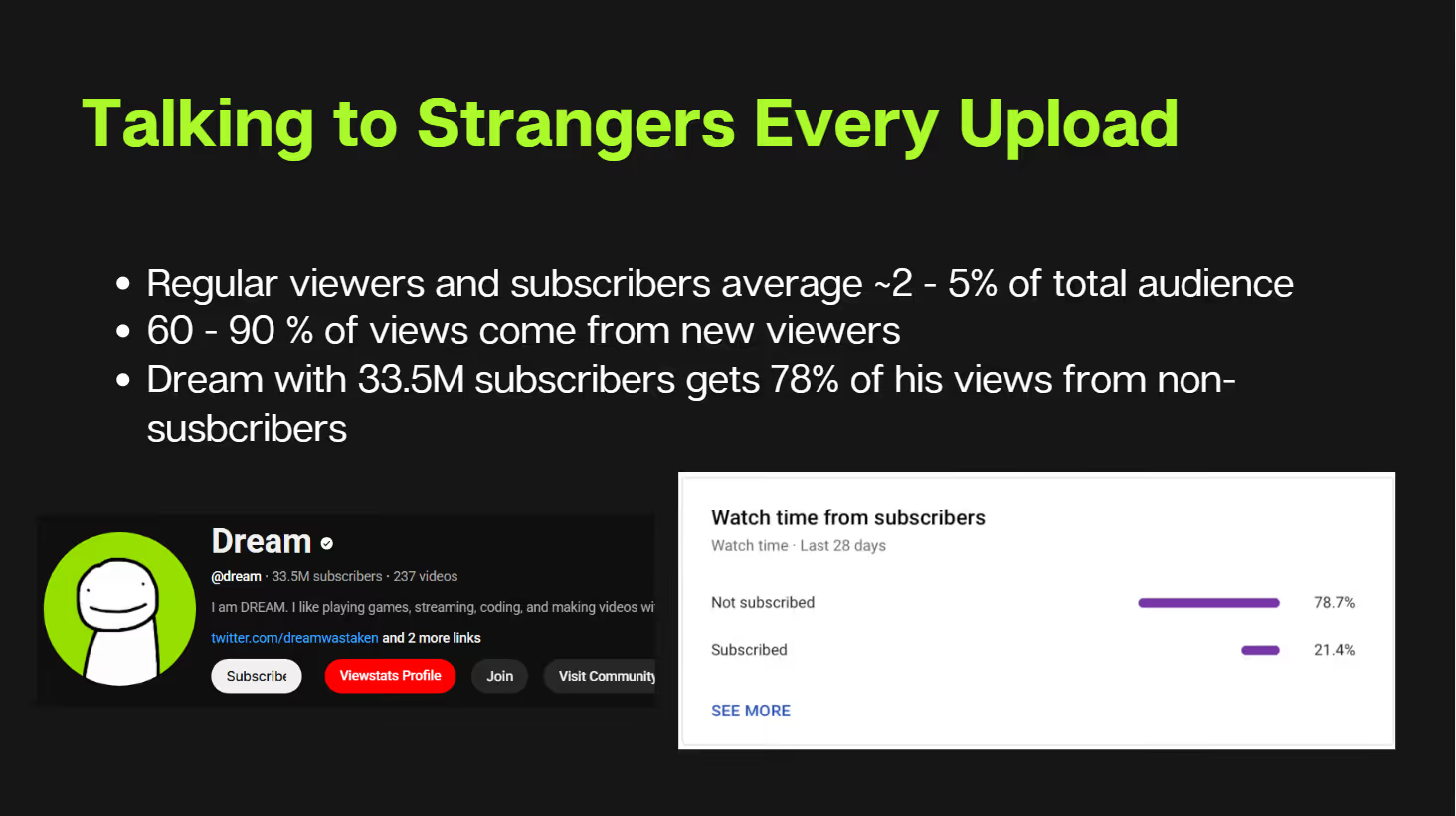
Your slides prove this reality clearly:
Regular viewers and subscribers usually make up only 2-5% of total audience
60-90% of views come from people who have never seen you before
Even mega channels like Dream (33.5M subs) get 78% of views from non-subscribers
This means your content is constantly being tested by cold audiences who have no emotional investment in you yet. Every video is a reset. Every upload is a fresh audition. The system reacts only to behavior. When strangers stay, your content is promoted. When they leave, your reach shrinks.
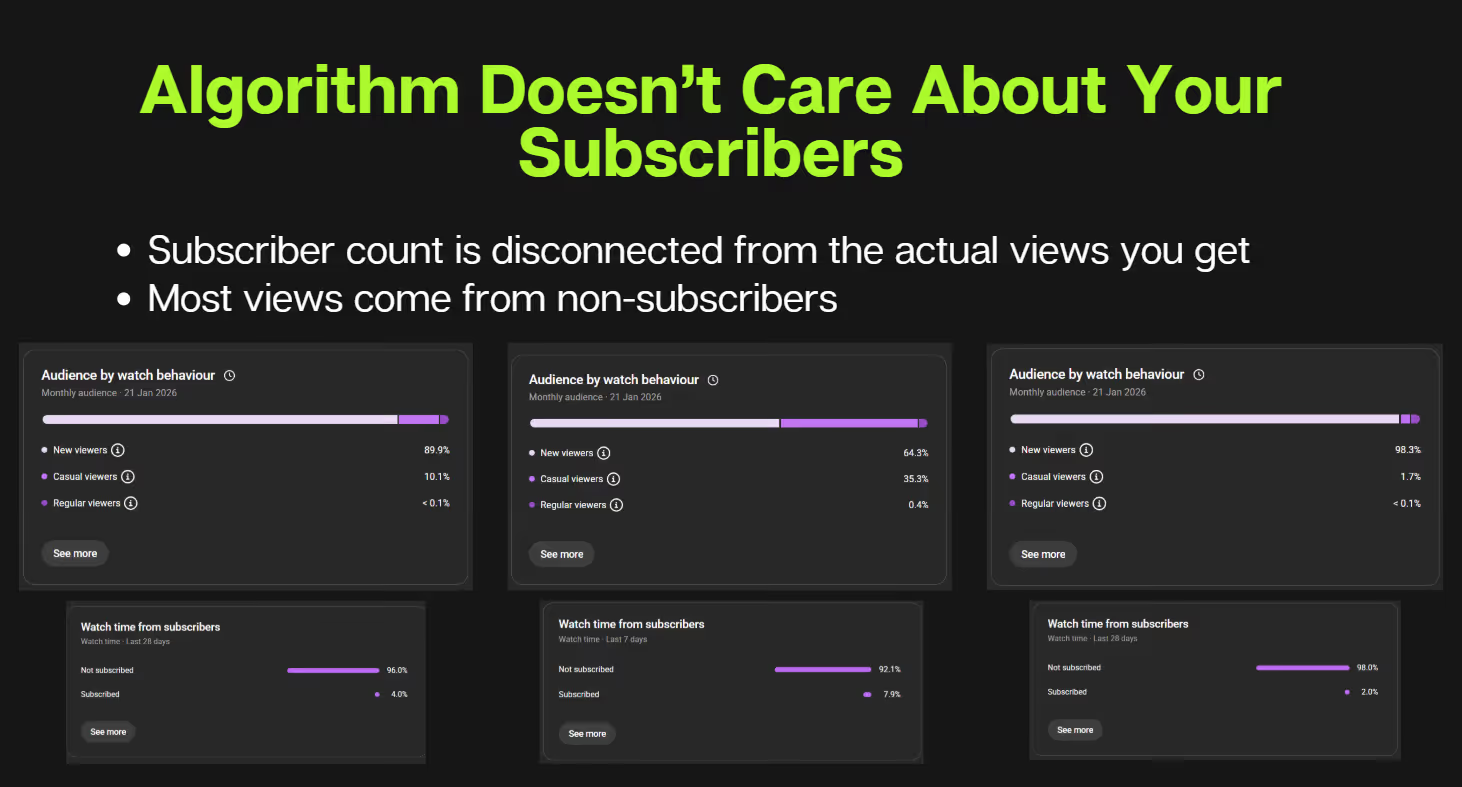
The Algorithm Doesn’t Care About Your Subscribers (And Neither Should You)
The old system rewarded loyalty. The new system rewards satisfaction and session depth.
Here’s what real data shows:
Regular viewers (6+ months of engagement): 5.3% of total audience
New viewers account for: 66.6% of all views
Even channels with 5M+ subs get 70-90% of views from non-subscribers
Only 3.9% of subscribers with the bell enabled ever receive notifications
Every upload is a first impression. You are speaking to strangers every time.
The algorithm waits for proof before it invests in your content. Growth is unlocked by how your video performs with people who have never seen you before.
The Three-Tier Viewer System (And Why Most Creators Misunderstand It)
YouTube no longer treats all viewers equally. It now places every person into a behavioral tier based on how consistently they return. These tiers are not labels, they are progress stages in a relationship-building system.
Growth only happens when people move upward through these stages. The system validates you with strangers first, not fans. This is why creator strategy has to start with clarity and instant value. New viewers are not comparing you to your past videos, they are comparing you to everything else they could click next. If your content feels confusing, slow, or irrelevant, the ladder collapses immediately. Casual viewers are the proof that your value is repeatable. They might not remember your channel name, but they recognize the feeling your content gives them. Regular viewers are the final stage where identity forms. They stop watching individual videos and start trusting your perspective. The mistake most creators make is trying to “build community” before they earn repeat attention. In 2026, community is not a growth tactic. It is the reward for consistent usefulness.
What this means in practice:
New viewers must feel value in the first 30 seconds
Casual viewers must feel continuity between videos
Regular viewers must feel identity and belonging
Content must be designed to move viewers up the ladder
Discovery always comes before loyalty
Why YouTube Changed the Algorithm
In 2025, YouTube replaced its legacy viewer model with a new 3-tier framework and introduced the Large Recommender Model powered by Gemini. This happened because manual categorization and surface-level metadata could no longer scale with the volume of uploads and the explosion of micro-interests. The platform needed a system that understands content like a human does, but at infinite speed. It is not enough to know what a video is “about.” YouTube needs to predict how a video will feel to the viewer and whether it will keep them engaged in the session. The new model is built to reduce risk. Every recommendation is a bet, and YouTube wants to bet on videos that reliably hold attention and create satisfaction. That is why creators who chase outdated hacks lose distribution. The system is designed to remove noise, filter empty clicks, and amplify content that supports longer sessions.
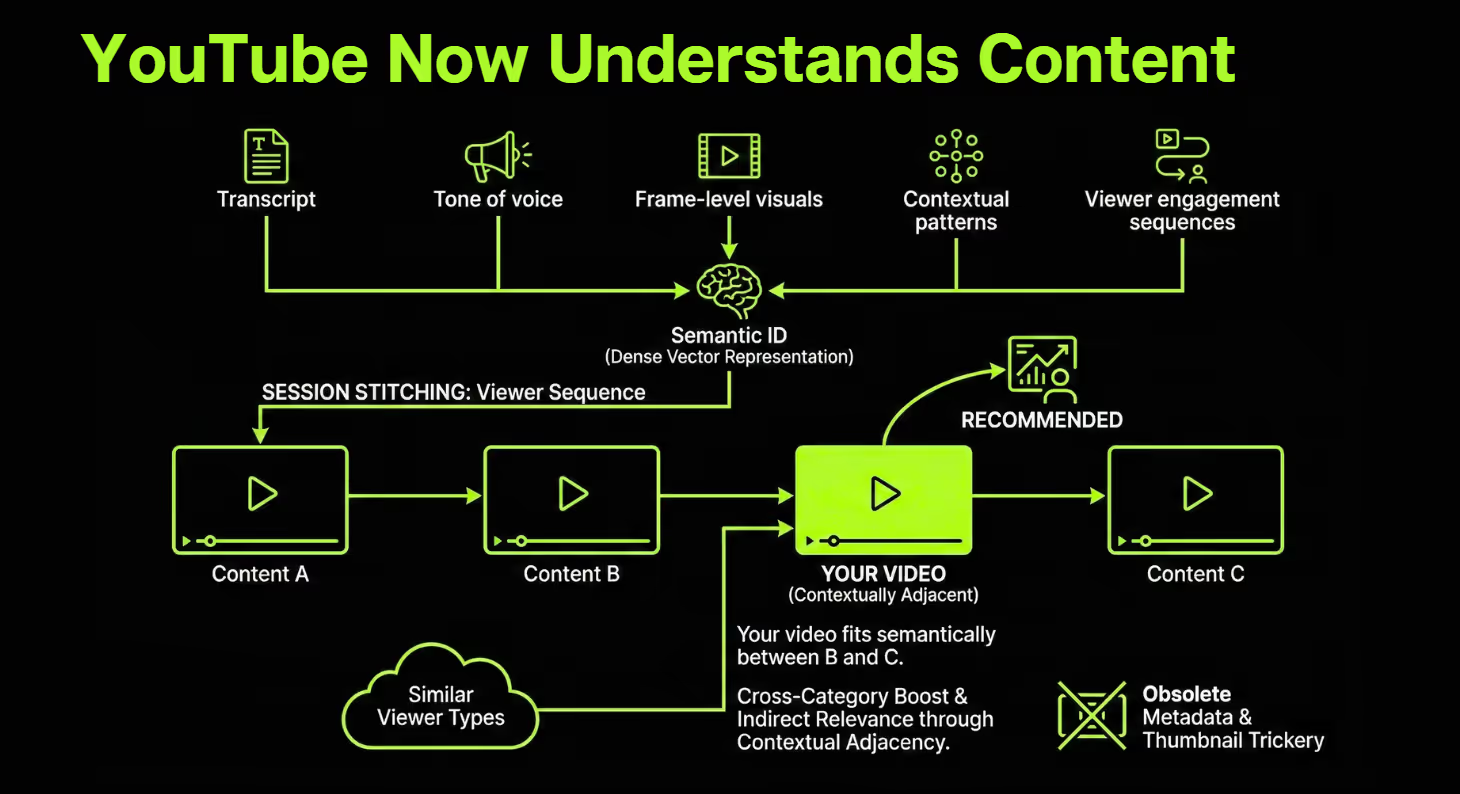
The Key Innovation: Semantic ID
Your video is now understood through:
Transcript meaning
Tone of voice
Frame-level visuals
Viewer behavior
Session patterns
YouTube now places videos by meaning, not labels. Semantic ID is essentially the “compressed identity” of your video inside the recommender system. It is how the platform understands what your content really delivers beyond the title. This is why two videos with similar topics can perform completely differently: the semantic profile might signal different pacing, different emotional intensity, or a different viewer outcome. If your transcript communicates uncertainty, your visuals feel low-effort, or your pacing creates drop-off, that becomes part of the content’s identity. On the other hand, if your video consistently produces satisfaction signals and fits cleanly into viewing paths, YouTube learns that your content is safe to recommend more aggressively. In 2026, your job is to produce videos that create a predictable experience, because the system rewards creators whose semantic identity aligns with viewer intent.
Session Stitching: How Videos Are Actually Recommended
YouTube inserts your video into viewing chains when it fits emotionally and contextually. This is why unrelated topics now appear together. Your video becomes a bridge, not a destination. The algorithm is not just recommending “more videos like this.” It is recommending “the next best step” in the viewer’s journey. That journey might be curiosity-based, problem-solving, entertainment-driven, or emotionally themed. If someone watches a video that triggers a desire for proof, clarity, or deeper explanation, YouTube searches for the best match to continue that momentum. If your video naturally continues the narrative or solves the next question, it gets inserted even if your niche label is different. This is a huge advantage for creators who design content as sequences. It means you can grow faster by positioning videos as part of a pathway instead of isolated uploads. When you build content that connects, the algorithm can stitch you into more sessions, more often.
Why Metadata and Clickbait Are Losing Power
Titles open the door. Retention decides your fate. YouTube now prioritizes:
Viewing sequences
Satisfaction signals
Session duration
Your video must feel like the right next step. Clickbait still gets clicks, but the system now punishes the mismatch between expectation and experience much faster. If a title promises something and the first 30-60 seconds don’t deliver, viewers bounce and YouTube reads that as a negative contribution to the session. The platform is increasingly optimized to protect viewer trust, which means it rewards creators who make accurate promises and deliver quickly. Metadata has become a supporting layer, not a driver. It can help the system understand what you intended, but it cannot override real behavior. This forces a higher standard: your pacing needs to validate the promise early, your structure needs to keep attention moving, and your content needs to feel satisfying even to cold viewers. In 2026, the algorithm is less impressed by “good marketing” and more impressed by “good experience.”
The YouTube Business Model (2026 Edition)
The platform now optimizes for:
Session duration
Viewer satisfaction
Repeat engagement
Subscribers are a lagging indicator. YouTube is not built to make creators popular. It is built to keep viewers watching. That means it rewards content that extends sessions, reduces drop-off, and increases the chance that someone watches another video afterward. Satisfaction is not just likes and comments. It is whether viewers feel the video was worth their time, whether they remain on platform, and whether they return later. Repeat engagement is the long-term signal that your content creates a habit. This is why channels that feel consistent, structured, and reliable grow faster than channels that chase random trends. YouTube wants predictable value, because predictable value produces predictable watch behavior. When your channel becomes a “safe recommendation,” distribution becomes smoother and more stable. This also explains why some creators get stuck: their videos may be fine, but they do not reliably push sessions forward.
The Metrics That Actually Control Your Reach
These are trust indicators, not vanity stats.
Monthly Unique Viewers
New vs Returning Ratio
Views per Unique Viewer
Satisfaction Signals
These metrics tell YouTube whether you are building real momentum or just collecting random clicks. Monthly unique viewers show how widely your content is penetrating the market, but more importantly they show how many people are willing to give you a chance. New vs returning tells the system whether your value is repeatable. If viewers come back, YouTube assumes your content creates a positive expectation. Views per unique viewer is a loyalty proxy. It signals whether your videos connect into a binge path. Satisfaction signals include the obvious ones, but YouTube also reads subtle behavior like rewatches, scrolling away, and whether viewers continue their session. When these metrics improve together, YouTube assigns higher distribution confidence to your content. The goal is not one metric spiking. The goal is the system believing you are consistently safe to recommend.
Why 1,000 Views in 7 Days Is a Growth Threshold
Early momentum proves relevance. Velocity builds confidence. Confidence builds reach. The first week is where YouTube decides whether your video should be tested wider or contained. If you can get consistent early traction from the right audience, YouTube reads that as a strong fit between your content and viewer intent. It is not about huge numbers. It is about reliability. A video that reaches 1,000 views quickly with strong retention sends a message: “this content works for this audience.” That gives YouTube permission to expand distribution into similar viewer clusters. Over time, this creates compounding momentum, because each upload trains the system more clearly on who your content satisfies. This is why creators who focus on consistent packaging and consistent delivery often win. They create predictable early velocity, and the algorithm rewards predictable performance. In 2026, growth is a pattern, not an event.
Monetization Myths vs. Reality
AdSense is volume-based. Sponsors are capped. Affiliates are unstable. Community monetization is controllable. The biggest monetization mistake creators make is tying income directly to views. Views fluctuate. RPM fluctuates. Sponsor deals fluctuate. Affiliate programs change. That makes revenue unpredictable and stressful. Community monetization flips the model because it turns attention into owned relationships. Instead of renting income from YouTube, you build income from trust. This works even at low view counts because the goal is not mass reach - it is high alignment. When your content speaks to a specific problem and your community solves it deeper, monetization becomes logical instead of salesy. People pay when they feel guided, supported, and confident. That is the difference between an audience and a customer base. In 2026, the winning creators are not those chasing bigger views. They are those building systems that convert attention into repeat buyers.
Why Community-First Monetization Scales Faster
Communities create trust. Trust creates conversion. Conversion creates stability. A community changes how viewers relate to you. They stop seeing you as content and start seeing you as access. Inside a community, the relationship becomes interactive. People ask questions, share wins, and identify themselves as part of something. That identity is what creates retention and revenue at the same time. It also makes your content perform better, because community members often binge, share, comment, and return more frequently. That sends positive signals back to YouTube and increases distribution confidence. Communities also let you sell without pressure, because the value is visible over time. Instead of pitching in every video, you build an environment where people naturally want deeper support. This creates a feedback loop: content drives discovery, community builds trust, trust drives sales, and sales finance better content. That is why it scales faster than relying on sponsors or AdSense.
Final Mental Model
You are no longer growing a channel. You are engineering behavioral flow. This shift changes how you plan content, how you judge performance, and how you define success. The goal is not to “upload more” or “get lucky.” The goal is to make your videos feel like the next logical moment in the viewer’s day. When your content matches what someone wants emotionally and practically in that moment, YouTube doesn’t need to be convinced. It can see the behavior instantly. That is when the platform stops treating you like an experiment and starts treating you like infrastructure. The system begins deploying you into more sessions, earlier in the chain, and to more aligned viewers because you are reducing risk and increasing satisfaction. This is why the creators winning in 2026 feel inevitable. They are not viral. They are positioned. They do not chase attention. They design experiences that hold it. That is the system in 2026.
Digital Products for Fast Growing Businesses
Join over 4,500+ satisfied DFY Dave customers, entrepreneurs, creators & companies worldwide!