These AI Avatars publish content, interact with audiences, promote products, and build communities without the physical limitations of a human creator. When designed strategically, they can run as automated income engines that operate around the clock.
This is not about replacing human creativity. It is about amplifying it. AI influencers blend storytelling, branding, automation, and monetization systems into a scalable framework. The result is a content ecosystem that continues producing value long after the initial work is done.
In this guide, you will learn how AI influencers actually generate passive income 24/7, what systems make them work, and how to structure your approach for sustainable growth instead of short-term hype.
What makes this shift especially powerful is that it lowers the barrier to entry for creators who previously felt overwhelmed by constant production pressure. Instead of needing to appear on camera daily or brainstorm endlessly, creators can design repeatable workflows that carry momentum forward. This allows more time for strategic thinking, experimentation, and refinement. Passive income here is not accidental. It is engineered. When you understand how content, automation, and monetization reinforce one another, you move from chasing opportunities to building an ecosystem that reliably produces them. That mindset change is where sustainable growth truly begins.
- Key takeaway: Passive income is built, not wished for.
- Core shift: Move from daily creation to repeatable systems
Understanding What an AI Influencer Really Is
An AI influencer is an AI Avatar powered by artificial intelligence tools that can create content, simulate personality, and engage audiences at scale. Think of it as a brand character combined with automated production pipelines.
Modern AI avatar creation is powered by tools creators use daily, such as HeyGen for AI avatars and voice-driven video, Higgsfield for cinematic AI visuals, Sora for high-quality AI video generation, and VEO 3 for advanced motion and storytelling visuals. These tools act as the production backbone that allows AI influencers to scale content creation far beyond manual workflows.
Unlike traditional influencers who depend entirely on filming schedules and personal availability, AI influencers operate through repeatable workflows. Scripts can be generated, voices synthesized, visuals produced, and posts scheduled in batches.
In practice, creators often combine tools like HeyGen for avatar delivery, Sora or VEO 3 for dynamic video scenes, and Higgsfield for stylized visuals to build a continuous pipeline that runs with minimal friction.
What makes this powerful is not just speed. It’s the consistency. AI influencers can maintain tone, visual identity, and posting frequency with machine precision. This consistency builds familiarity, and familiarity builds trust.
Because these AI production tools deliver repeatable output, creators can preserve the same visual language, voice style, and pacing across dozens or even hundreds of pieces of content.
The goal is not to trick people into thinking a machine is human. The goal is to create a recognizable AI Avatar that delivers value, entertainment, or education in a way audiences enjoy.
Using tools like HeyGen, Higgsfield, Sora, and VEO 3 allows creators to enhance storytelling while keeping the experience transparent, polished, and audience-focused.
A strong AI influencer is designed with intention. Personality traits, communication style, niche expertise, and visual identity are defined early, so every piece of content reinforces the same brand signal. Over time, audiences begin associating that persona with a specific experience or type of value. This is similar to how successful human creators build recognizable brands, but with AI, execution becomes faster and more scalable.
These modern AI creation platforms enable creators to iterate visuals, tone, and presentation rapidly, turning the AI avatar into a reliable digital ambassador for your ecosystem, capable of producing content at a pace that would otherwise lead to burnout. When done correctly, it feels less like automation and more like a continuously active creative studio.
An AI influencer is not “just content.” It is a brand persona & production system.
Consistency builds trust, and trust drives monetization.
The Passive Income Framework Behind AI Influencers
Passive income does not mean zero effort. It means front-loading effort into systems that continue working after setup. AI influencers thrive because they are system-driven.
At the core, every successful AI influencer uses three layers:
- Content production automation
- Distribution and scheduling
- Monetization integration
Once these layers are built, content flows continuously while monetization channels stay active.
Here is what that system enables:
- Content pipelines that generate weeks of material in hours
- Automated posting schedules across platforms
- Evergreen monetization links embedded in descriptions and bios
- Analytics feedback loops that improve future output
Instead of chasing viral moments, the system compounds over time.
This framework works because each layer supports the others. Automated production ensures consistent output. Scheduling guarantees visibility. Monetization converts attention into income. When analytics reveal patterns, the system evolves intelligently rather than randomly. Over time, this creates a compounding effect where content performance improves while effort decreases. Instead of constantly starting from scratch, creators operate inside a loop that becomes more efficient with every cycle. This structured approach transforms content creation from a reactive task into a predictable process designed for longevity.
- Think in systems: one workflow → many outputs
- Think in loops: publish → learn → refine → publish again
Systems That Make Money 24/7
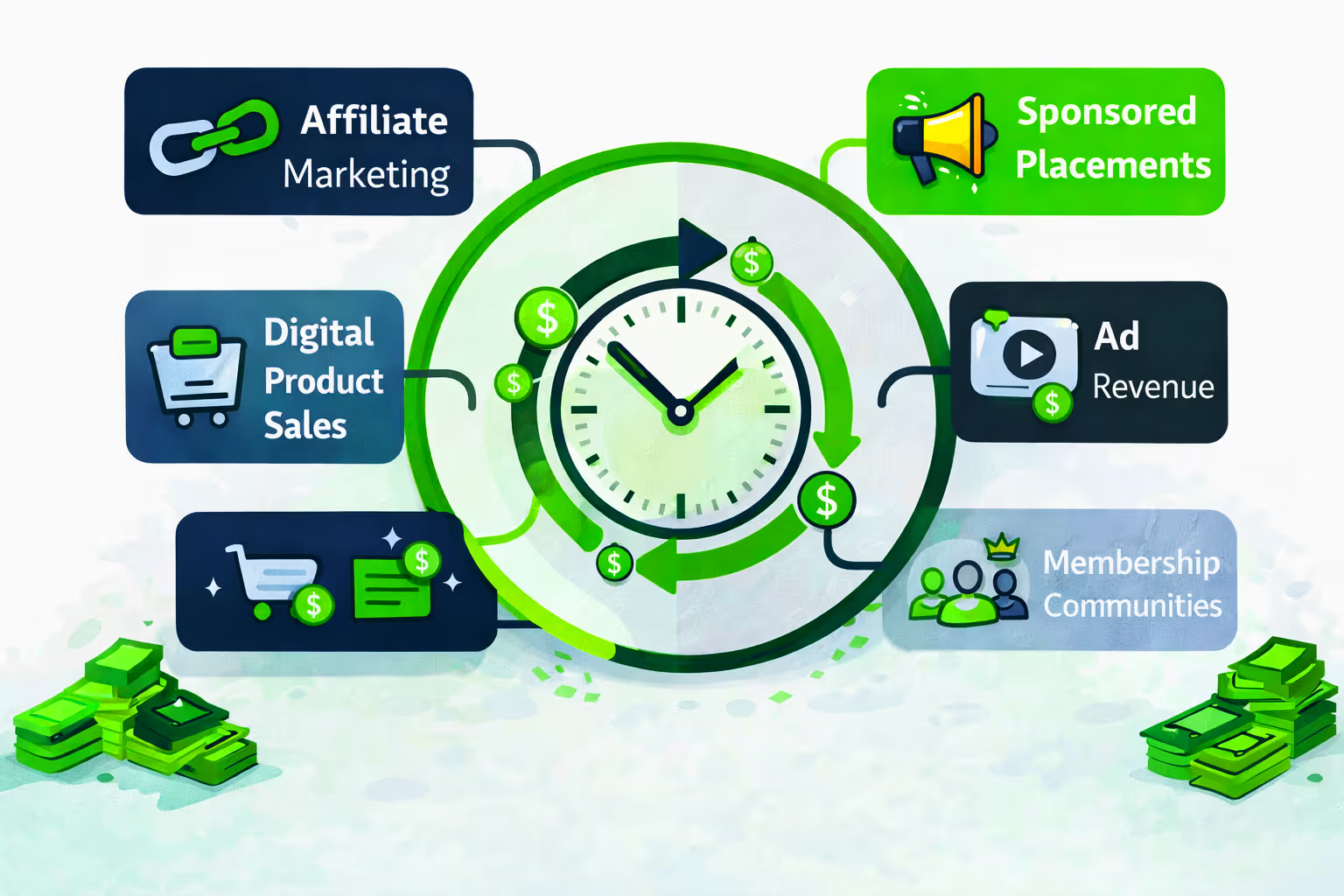
AI influencers do not rely on a single monetization method. They stack multiple income channels so that each piece of content becomes a gateway to revenue.
Common income streams include:
- Affiliate marketing through product mentions and links
- Digital product sales, such as guides, templates, or courses
- Brand deals and Sponsorships once the audience trust grows
- Ad revenue from the YouTube partner program, which accepts AI Influencer channels
- Skool and Whop communities
- Membership communities and premium content
Each stream operates independently. When layered together, they create a diversified income engine that runs continuously.
Tip: Focus on monetization that aligns with your niche. A tech-focused AI persona should promote tools, while a wellness persona might link to educational programs or products. Relevance drives conversions.
Diversification reduces risk and increases earning potential. If one stream slows down, others continue generating income. AI influencers are uniquely suited for this model because automated content can reference multiple value paths without overwhelming the audience. Smart creators design content that feels educational or entertaining first, while monetization flows naturally inside that experience. This builds trust while keeping revenue channels active. Over time, stacked monetization transforms each viewer interaction into multiple potential outcomes, strengthening long-term income stability.
- Best practice: Choose monetization offers that feel like the next logical step for your audience
- Compounding effect: One post can feed multiple revenue paths