YouTube in 2026 feels completely different from how it did just a couple of years ago. People scroll faster, click less, and move on the moment a video doesn’t grab them. At the same time, almost every niche is crowded, and the algorithm has become very good at one thing: showing viewers content they actually enjoy and stick around for. Because of that, a lot of old tactics - like posting constantly, cramming in keywords, or chasing views at all costs - don’t just stop working, they actively hurt growth.
The tricky part is that much of this outdated advice still sounds reasonable. It feels logical to upload every day, stretch videos past 20 minutes, or optimize every line of text for search. But YouTube has changed. Today, creators don’t win by gaming the system or producing more content than everyone else - they win by creating videos that are genuinely satisfying to watch.
If you want real growth and monetization in 2026, you have to let go of those myths and focus on what actually matters now: getting people to click, keeping them watching, encouraging them to watch another video, and earning their trust over time. Below, we’ll break down the most common pieces of outdated YouTube advice you should stop following - and what to do instead.
“You Must Upload Every Single Day to Grow”
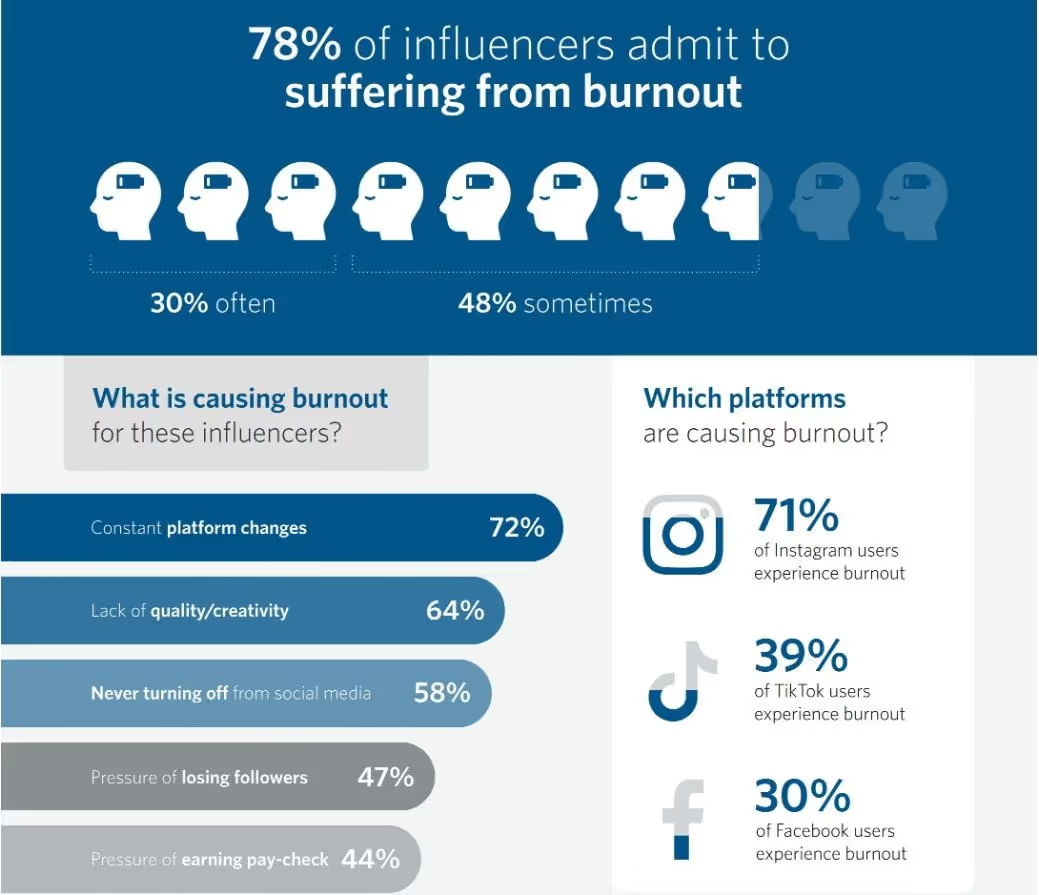
This idea often comes from looking at large channels with hundreds or thousands of videos and assuming frequency caused their success. What’s rarely discussed is when those creators grew, how much competition existed, or how much help they had behind the scenes. In 2026, YouTube is far more selective about which videos it promotes, and uploading more does not compensate for weak performance. In fact, excessive posting can confuse both viewers and the algorithm if quality or clarity drops.
This advice might be the biggest creator burnout machine on the internet. Daily uploads used to work when YouTube was less crowded and the algorithm rewarded channels for sheer activity. In 2026, daily uploads usually create the opposite effect: inconsistent quality, rushed ideas, and lower retention.
Here’s the truth: YouTube doesn’t reward you for uploading. It rewards you for satisfying viewers. If daily uploads lower your average retention and CTR, the algorithm learns that your channel isn’t consistently delivering. That’s a long-term disadvantage.
What to do instead (2026 strategy):
- Pick a schedule you can protect. If you can publish one strong video per week without stress, that’s better than five weak ones.
- Batch your workflow, not just your filming. Batch ideas, scripts, thumbnails, and filming days. The biggest time-saver isn’t shooting - it’s decision-making.
- Build “repeatable formats.” Example: “3 Mistakes / 3 Fixes,” “Before vs After,” “Step-by-Step Checklist,” or “React + Breakdown.” Formats reduce mental load and keep your channel consistent.
- Use a two-tier upload system:
- Core videos (long-form, high value, higher effort)
- Support content (Shorts, community posts, quick updates)
This keeps your channel active without sacrificing quality.
If you want a simple rule: Upload as often as you can keep your retention high. That’s how channels grow in 2026 without burning out.
“Longer Videos Automatically Rank Better”
This belief comes from a misunderstanding of how YouTube measures success. Many creators assume that longer videos equal more watch time, but they overlook how that watch time is earned. In 2026, YouTube looks closely at where viewers drop off and how satisfied they are, not just how long a video is. Length without engagement is now a liability, not an advantage.
This myth comes from an old era when creators chased “watch time” by making everything longer. In 2026, YouTube cares far more about retention and satisfaction than raw length. A 20-minute video people abandon at minute four is weaker than a 9-minute video people watch to the end.
Think of it like this: YouTube wants to keep people on the platform. A video that makes viewers stay engaged and then watch another video is gold - regardless of length.
What to do instead (retention-first strategies):
- Write a hook that answers “why should I care?” in 10 seconds. Not your intro, not your background - your promise.
- Use micro-payoffs early. Give viewers something useful in the first 30–60 seconds (a quick win, a surprising tip, a strong example).
- Add pattern breaks every 10–20 seconds. Change camera angle, add b-roll, switch to screen share, show a graphic, or cut tighter. It signals momentum.
- Trim ruthlessly. If a sentence doesn’t add clarity, emotion, or progress - cut it.
- Use “open loops.” Mention a result you’ll show later (“In a minute I’ll show you the template I use…”) and actually deliver.
If your niche benefits from longer content (tutorials, deep dives), go long - but earn every minute with structure. In 2026, “long” works when it feels fast.
“Just Upload Good Content and the Algorithm Will Find You”
This advice sounds comforting because it removes responsibility from the creator. Unfortunately, it ignores how crowded YouTube has become. In 2026, there is excellent content everywhere, which means visibility depends on clarity and positioning as much as quality. If viewers don’t instantly understand why your video matters to them, they’ll scroll past it - no matter how good it is.
This sounds nice, but it’s incomplete. In 2026, “good content” can still flop if the idea is weak or the packaging is unclear. YouTube doesn’t promote effort - it promotes performance. Your video can be amazing, but if your title/thumbnail don’t communicate value quickly, people won’t click.
You’re competing with thousands of videos that may be “good.” The difference is positioning.
What to do instead (discovery strategy):
- Start with the viewer’s problem, not your topic. “How to Edit Videos” is broad. “Edit Faster Without Losing Retention” is specific and emotional.
- Build a “one-sentence video concept.”
Example: “I’ll show creators 5 outdated YouTube tips that kill retention and what to do instead.”
If you can’t summarize the promise clearly, the packaging will be messy. - Create thumbnail + title before filming. If you can’t sell the idea, don’t shoot it yet.
- Use the “3-title test.” Write 3 different title angles: curiosity, benefit, and contradiction. Choose the one that matches your audience best.
- After publishing, diagnose properly:
- Low CTR = packaging issue (title/thumbnail)
- Low retention = pacing/story issue
- Both low = weak concept or mismatch
The algorithm can’t “find” what viewers don’t click. Great creators in 2026 build videos like products: idea first, packaging second, execution third.
“Keywords Are the Most Important Thing”
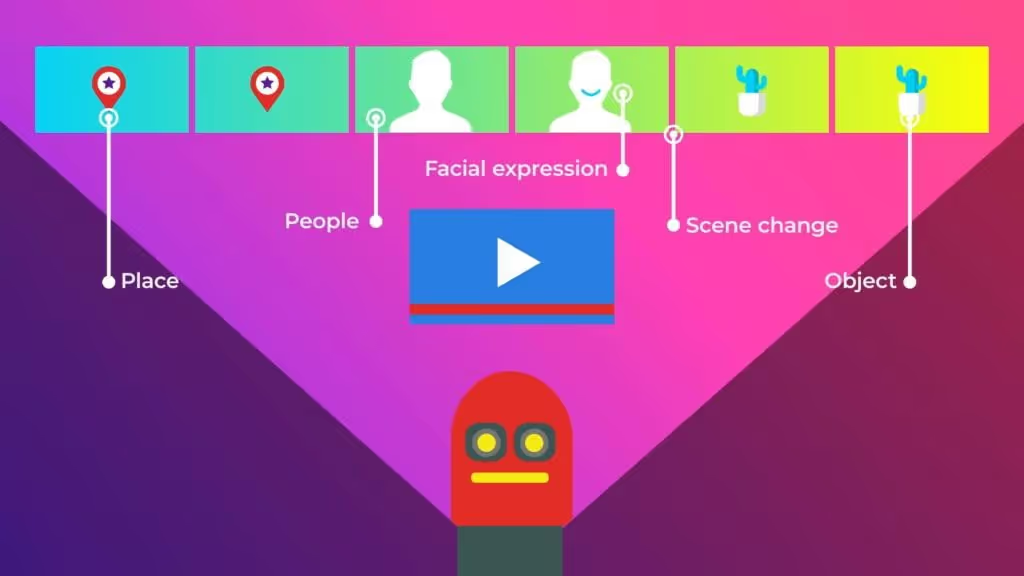
Keywords feel safe because they’re measurable. Many creators cling to them because they offer a sense of control. However, YouTube’s recommendation system in 2026 relies far more on viewer behavior than text-based signals. When keywords dominate your strategy, content often becomes stiff, over-optimized, and less appealing to real humans.
Keywords still matter, but not the way people think. In 2026, YouTube understands context and viewer behavior far better than exact keyword matches. Keyword stuffing is outdated - and it can even make titles feel robotic, which lowers CTR.
The modern role of keywords is research: understanding what your audience wants and how they describe it. Keywords help you find proven demand. But the algorithm decides distribution based on signals: CTR, retention, session time, satisfaction.
What to do instead (modern SEO that actually works):
- Use keywords to pick topics, not to stuff metadata. Look for repeated questions in your niche and build videos around those problems.
- Write titles like a human, with a clear benefit. Instead of “YouTube SEO 2026 Keywords,” try “Stop Doing YouTube SEO Like It’s 2018.”
- Use “keyword + emotion.” A great title includes the topic plus a reason to care: urgency, surprise, fear, or reward.
- Add a “search paragraph” in your description. First 2–3 lines should explain who the video is for and what it solves. That helps YouTube understand context.
- Strengthen your first 30 seconds. Search traffic is useless if those viewers bounce.
Keywords can open the door, but retention keeps the video alive. In 2026, SEO is a support system - not the growth engine.
“YouTube Shorts Don’t Help Long-Term Growth”
Early experiences with Shorts led many creators to dismiss them entirely. Random viral views without long-term engagement created confusion and disappointment. In 2026, Shorts are no longer experimental - they’re integrated deeply into YouTube’s ecosystem. The mistake isn’t using Shorts; it’s using them without alignment.
This was true for some creators when Shorts brought random viewers who never watched long-form. In 2026, Shorts absolutely can help - if you treat them as strategic funnels, not random clips.
Shorts are one of the best discovery tools on YouTube. They can put your face, voice, and ideas in front of people who would never search for your channel. The key is alignment.
What to do instead (Shorts-to-long-form strategy):
- Use Shorts as “trailers,” not highlights. End with curiosity that pushes to long-form: “Full breakdown is on my channel.”
- Create Shorts in series. Series builds return viewers. Example: “Outdated YouTube Advice #1, #2, #3…”
- Pin a comment with a direct next step. “Watch the full guide here (title of video).”
- Post Shorts that match your long-form audience. If your long videos are about YouTube growth, don’t post random memes. You’ll train the algorithm on the wrong viewer profile.
- Use Shorts to test ideas. If a Short topic gets strong engagement, expand it into a long video.
Shorts don’t replace long-form - they feed it when your topics and viewer intent match.
“Buying Views or Subscribers Helps Kickstart Growth”
This advice often targets creators who feel stuck and discouraged. Low numbers can be emotionally draining, especially early on. Unfortunately, buying engagement creates a false sense of progress that collapses quickly. In 2026, YouTube’s systems identify low-quality traffic faster than ever, making artificial growth extremely damaging.
Buying engagement is one of the fastest ways to poison your channel. It creates fake signals - people don’t watch, don’t comment meaningfully, and don’t return. YouTube detects that behavior and reduces distribution.
Even if you get “numbers,” they won’t translate into money, community, or real reach. And your analytics will become unreliable, so you’ll make worse decisions.
What to do instead (real growth accelerators):
- Improve your first minute. This is your biggest leverage point. Cut long intros and get to the point.
- Ask for a specific comment. Not “What do you think?” but “Which of these mistakes are you guilty of - #1 or #2?”
- Build binge paths. End each video by recommending one next video that naturally continues the story.
- Create “evergreen winners.” Videos that answer ongoing problems (monetization, editing, ideas, scripts) become long-term traffic assets.
- Track the right metrics: CTR, average view duration, returning viewers, and views per viewer.
If you want a “kickstart,” the safest one is: make your next 3 videos better than your last 3. Real growth compounds.
“Views Are the Only Metric That Matters”
Views are easy to see, easy to compare, and easy to obsess over. That’s why many creators equate views with success. But in 2026, views without engagement rarely lead to income or longevity. YouTube increasingly rewards channels that build habits, not spikes.
Views are loud. Retention is quiet. Monetization lives in the quiet metrics.
A channel with 50,000 engaged viewers can earn more than a channel with 500,000 random viewers. Why? Because engaged viewers watch more, trust more, click more, and buy more. In 2026, views alone are a vanity metric unless they come with retention and loyalty.
What to focus on instead (metrics that predict success):
- Returning viewers: Are people coming back? This is one of the strongest signals of channel health.
- Average view duration: Are people staying long enough for YouTube to recommend your content?
- Views per viewer: Are people watching more than one video per session?
- Subscriber conversion per video: Which topics create loyal fans, not just clicks?
A simple strategy: review your top 10 videos and identify patterns (topic, format, length, hook style). Then make more videos that match those patterns - without copying yourself into boredom.
“You Need Expensive Gear to Succeed”
This myth delays creators for months or years because it creates a false barrier to entry. In reality, viewers rarely stop watching because of camera quality - they stop because content is unclear, slow, or unengaging. In 2026, clarity beats polish almost every time.
This myth delays creators for months or years. The truth: viewers don’t care about your camera model. They care about audio clarity, pacing, and value. A great idea shot on a phone beats a boring idea shot on a $3,000 camera.
Gear matters eventually, but it’s not the starting line - it’s an upgrade.
What to do instead (high-impact low-cost upgrades):
- Fix audio first. A simple lav mic or USB mic often gives you the biggest quality jump.
- Use natural light. Face a window. Cheap and effective.
- Improve framing and energy. Camera at eye level, clean background, clear delivery.
- Use a script outline. Most “production quality” issues are actually pacing issues.
If you want to spend money, spend it where it affects viewer experience: audio, lighting, and editing speed - not fancy cameras.
What Actually Works on YouTube in 2026
Once outdated advice is removed, creators often realize YouTube growth is simpler - but more demanding. Success comes from understanding people, not gaming systems. Channels that grow consistently focus on systems they can repeat and refine over time.
YouTube growth in 2026 is built on systems, not hacks. The creators who win aren’t doing secret algorithm tricks - they’re doing the basics extremely well: strong ideas, great packaging, retention-first delivery, and smart monetization.
What works right now:
- Retention-first structure: hook → value early → pattern breaks → payoff → next video
- Clear niche promise: people should know exactly what they’ll get from your channel
- Packaging discipline: titles and thumbnails that communicate one idea instantly
- Binge design: playlists, end screens, and video sequencing that keeps viewers watching
If monetization is a priority, you need to think beyond ad revenue and build income systems.