Faceless YouTube channels are no longer an experiment or a side trend. In 2026, they are one of the fastest-growing business models on the platform. Entire digital companies are being built on channels where no one ever shows their face. These creators rely on storytelling, pacing, structure, editing rhythm, and emotional triggers instead of personal branding. Viewers do not care who you are. They care what they feel and what they gain.
What separates faceless channels that grow from those that fail is not the niche, the voiceover, or the editing software. The real difference is the upload system. Most creators pour all their energy into production and then rush the upload. They click through settings, publish, and hope for the best. In 2026, that approach quietly kills your reach before the algorithm ever tests your content.
Your upload process is now a performance signal. It tells YouTube whether your channel is reliable, professional, and safe to recommend. When you treat uploading as part of your content strategy instead of an afterthought, everything changes.
Why Upload Strategy Matters More for Faceless Channels
Faceless creators do not have a human face to create emotional connection. There is no personality to lean on, no visual charm, no charisma. This means your success depends entirely on viewer behavior. Every click, every second watched, and every follow-up view matters more than ever.
In 2026, YouTube is not a keyword engine. It is a satisfaction engine. The platform measures how your content makes people behave:
- Do they click the video?
- Do they stay past the first 30 seconds?
- Do they continue watching other videos?
Your upload workflow influences all of these. If your video is rushed into public, YouTube has less confidence in it. If your upload is clean, optimized, and strategically delayed, the platform can fully analyze and position your content correctly.
Your upload workflow is now part of your marketing, branding, and long-term growth system. It is not a technical task. It is a psychological signal builder.
Step 1: Always Start With Private or Unlisted
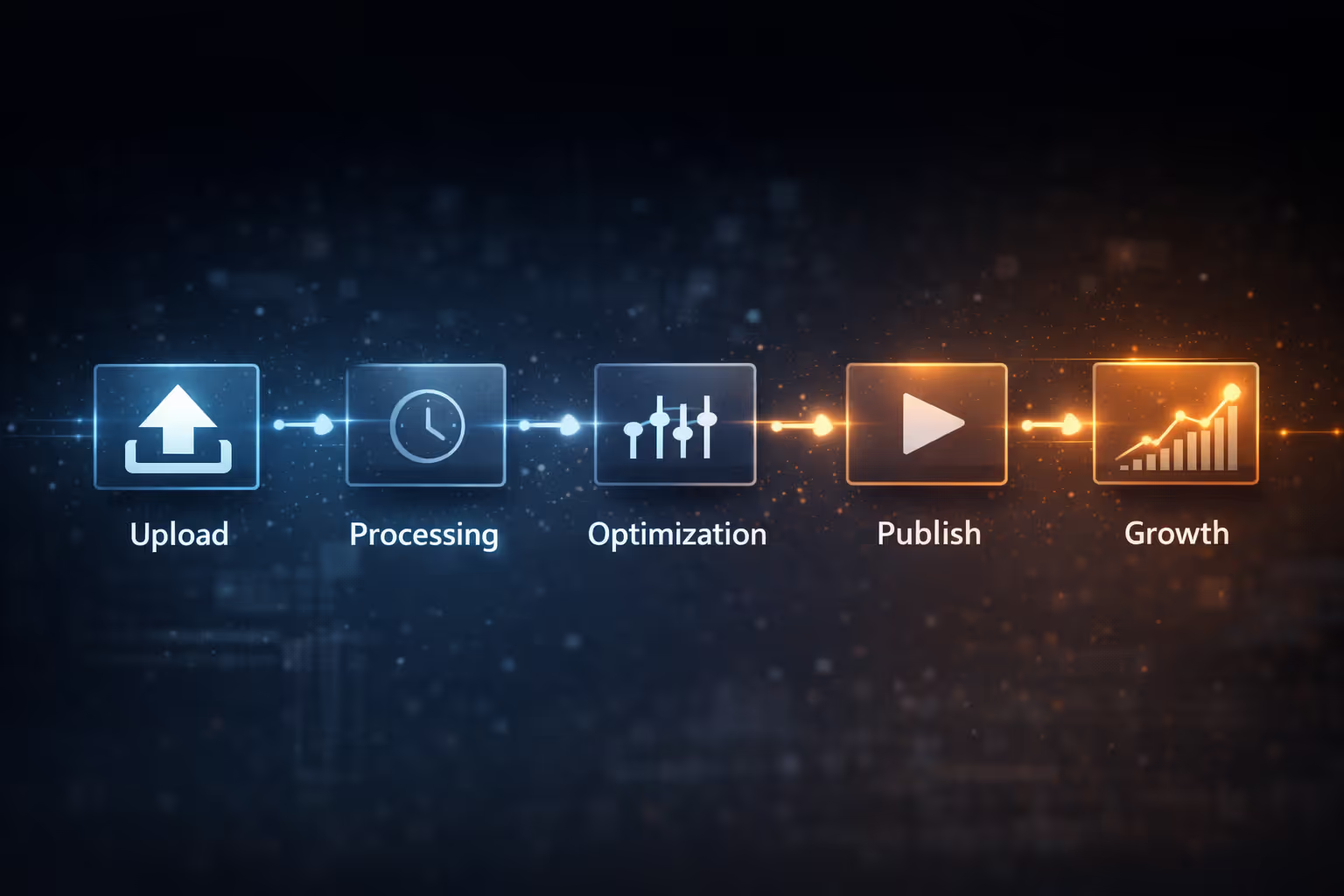
Publishing immediately after upload is one of the most damaging mistakes faceless creators make. When a video finishes uploading, YouTube still needs time to process quality levels, scan for copyright issues, evaluate advertiser suitability, and index the content properly. If you publish before that process is complete, the system launches your video with incomplete data.
Setting your video to private or unlisted gives YouTube time to fully understand what your content is about. It also gives you time to rewatch the final render and catch errors that could hurt retention.
Helpful habits:
- Always wait at least two hours before publishing
- Rewatch the first minute carefully
- Check audio balance and visual clarity
This short delay protects your first 24 hours, which often determine your long-term reach.
Step 2: Set the Legal Foundation
Before touching your title or thumbnail, you must correctly configure legal settings. The most important is the Made for Kids option. This is not optional. If your content is intended only for children under 13, select made for kids. Otherwise, select not made for kids.
This setting affects monetization, comments, recommendations, and notifications. Incorrect labeling can reduce reach or trigger reviews.
Once you set this correctly, go to YouTube Studio and define default upload settings. This prevents mistakes and saves time as your channel grows.
Step 3: Packaging Comes Before Content
For faceless channels, packaging is your identity. Your title and thumbnail define your brand more than your voice or visuals. They must be created before recording or editing.
When packaging comes first, your content becomes clearer, more focused, and more emotionally aligned. Your visuals support the message instead of distracting from it.
Creators who design packaging last often struggle with vague messaging and weak emotional pull.
Step 4: Two Types of Titles for 2026
Search titles are clear and problem focused. They work when viewers are actively searching for answers. Browse titles are emotional and curiosity driven. They work when viewers are scrolling casually.
For faceless channels, browse titles often scale faster because they create intrigue and emotional tension. A good title does not explain everything. It invites discovery.
Step 5: Thumbnails That Stop the Scroll
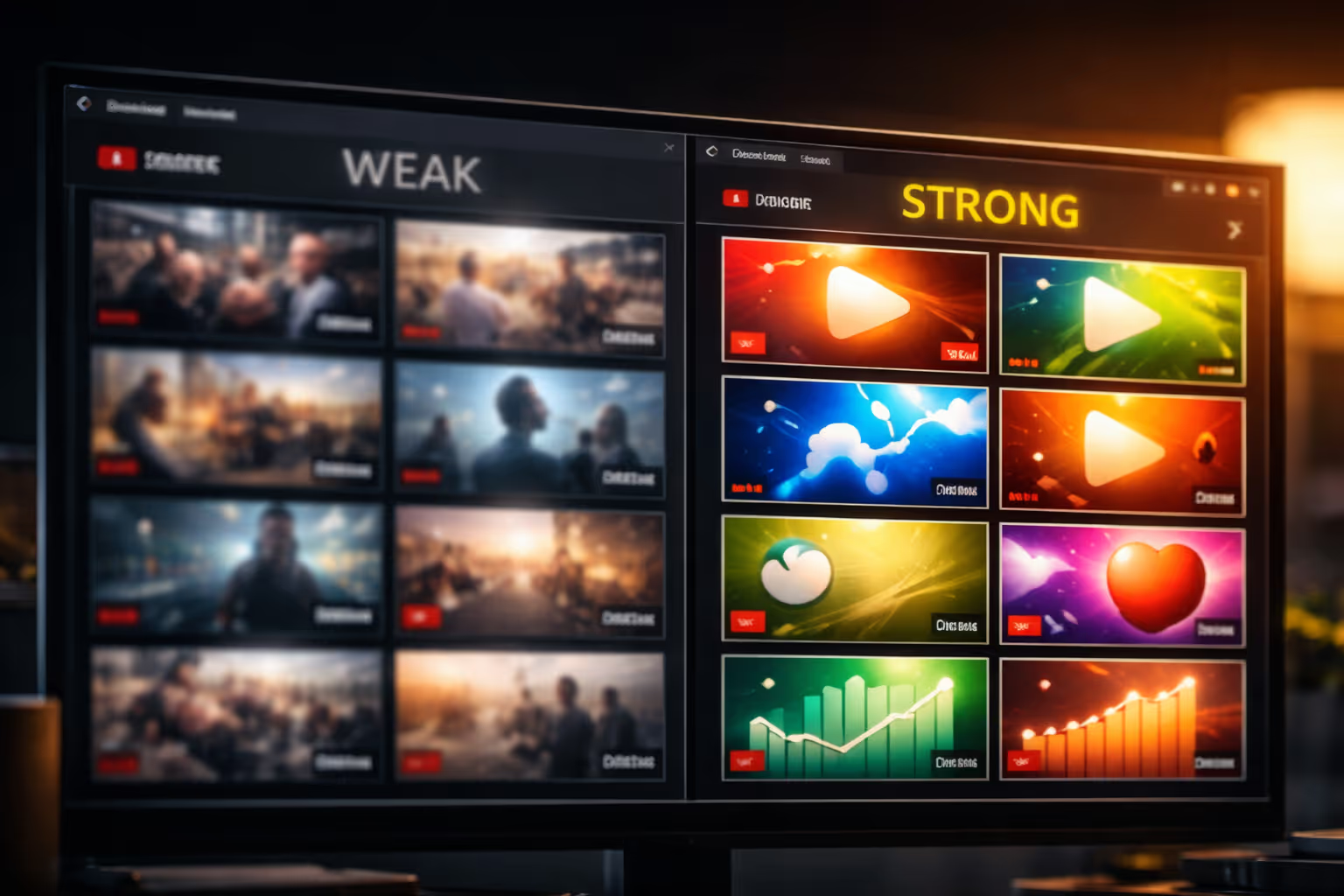
Your thumbnail is not decoration. It is a psychological trigger that decides whether your video even gets a chance. In a faceless YouTube channel, your thumbnail is doing the job that your face would normally do on a traditional channel. It must instantly communicate emotion, value, or curiosity in a fraction of a second, otherwise the viewer scrolls past without a second thought.
When someone scrolls through YouTube, they are not reading carefully. They are feeling. Their brain is making split-second decisions based on color, contrast, and emotional signals. If your thumbnail feels confusing, cluttered, or boring, the viewer’s brain simply moves on. That is why simplicity is power. Clear thumbnails feel safe, professional, and trustworthy, which makes people more likely to click.
A strong thumbnail feels clean, focused, and intentional. It should visually complete your title, not repeat it. The title explains the idea. The thumbnail makes the viewer feel the idea.
Helpful design principles:
- Use one main subject that stands out clearly
- Show one strong emotion or idea
- Use contrast between the background and the subject
- Keep text minimal and bold so it reads on a phone
- Avoid clutter, shadows, and tiny details
Always preview your thumbnail at small size before uploading. If you cannot understand it in two seconds, it will not perform.
Step 6: Create Session Flow, Not Subscriptions
In 2026, session time is more valuable than subscribers. A viewer who watches three of your videos in a row sends a much stronger signal to YouTube than someone who clicks subscribe and leaves. This is because YouTube is a platform that rewards attention and satisfaction, not follower counts.
Session flow means designing your content so that one video naturally leads into the next. You are not just making individual videos anymore. You are building a viewing journey. When YouTube sees that people continue watching your content, it starts recommending your videos more often and to wider audiences.
At the end of every faceless video, your job is to guide the viewer forward. Do not overwhelm them with options. One clear path is enough.
Strong session flow habits:
- Mention the next video by name
- Explain what they will gain by watching it
- Show the thumbnail visually
- Remove distractions in the outro
When you focus on sessions instead of subscriptions, growth becomes faster, stronger, and more stable.
Step 7: Monetization Setup That Protects Revenue
Monetization is not just about turning ads on. It is about protecting your channel’s long-term earning power. Every time you self-certify a video incorrectly, you increase the risk of manual reviews, limited ads, and even demonetization. Over time, this can damage your channel trust score.
Honest certification keeps your channel clean and safe. YouTube cross-checks your videos using AI, audio scans, and viewer feedback. Trying to trick the system always backfires eventually.
You can also protect your brand by blocking certain ad categories that do not align with your values. This prevents inappropriate ads from appearing on your content and keeps your channel professional.
If you are not monetized yet, you need a system that builds income faster instead of waiting.