These YouTube Niches Are Easiest to Monetize for Beginners

If you’re a beginner and your goal is to earn as early and as realistically as possible, niche selection matters more than thumbnails, editing style, or upload frequency.

YouTube niches easiest to monetize for beginners showing high RPM categories, monetization strategy, and channel growth roadmap

Starting a YouTube channel feels simple on the surface. You pick a topic, upload videos, and hope the algorithm notices you. In the beginning, everything feels possible. You imagine consistent views, steady growth, and eventually income. But after a few weeks, or sometimes months, most beginners hit the same frustrating wall: you get views but you don’t get money.

That moment is discouraging because effort is there, uploads are happening, but the results don’t match expectations. Many creators assume the issue is their editing, their voice, their thumbnails, or even the tone of their script. In reality, most of the time, it isn’t a content problem at all.

It’s a niche problem.

YouTube monetization is not evenly distributed. Some niches are flooded with advertisers, affiliate offers, and products that naturally convert viewers into buyers. Other niches depend almost entirely on viral luck, massive scale, or brand deals that only come after years of consistency. If you’re a beginner and your goal is to earn as early and as realistically as possible, niche selection matters more than thumbnails, editing style, or upload frequency.

This article breaks down the YouTube niches that are easiest to monetize for beginners, explains why they work, how beginners can enter them without experience, and what kind of content actually makes money, not just views.

Quick Monetization Wins You Can Apply in Any Niche
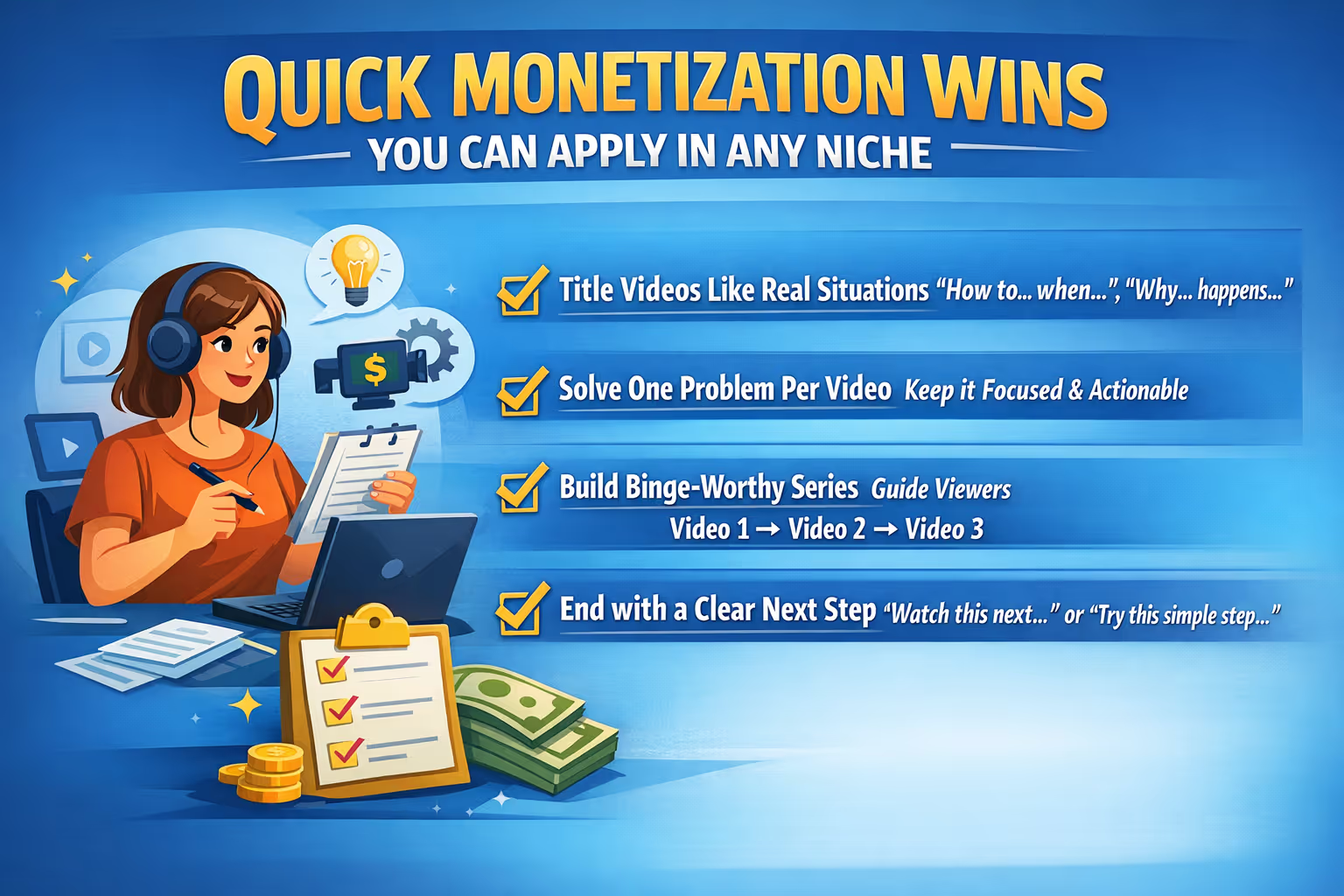
YouTube monetization checklist for beginners showing solution-based video strategy, series content, and early revenue optimization

A simple way to speed up monetization is to build videos around “problem → solution → next step.” The biggest mistake beginners make is creating “topic videos” instead of “solution videos.” A topic video sounds like, “Budgeting tips for beginners.” A solution video sounds like, “How to stop overspending when you use a debit card.” The second one attracts the exact viewer who is already searching for help, and those viewers are far more likely to click affiliate links, watch longer, and come back.

Another strategy that works across all niches is to pick one content format you can repeat without stress, such as a 6-10 minute “explain + example + quick recap” structure. This consistency makes your channel feel predictable and trustworthy, which helps both retention and conversions.

The Monetization Blueprint Checklist (Simple but Powerful):

  • Title videos like a real situation (“how to… when…”, “why… happens”, “best… for…”)
  • Solve one problem per video (avoid trying to teach everything at once)
  • Build a series path (Video 1 → Video 2 → Video 3) so viewers binge-watch
  • Include one “decision video” early (comparison, “is it worth it?”, free vs paid)
  • End with a next step (a related video to watch next, or a simple action to try)

Why Niche Selection Matters More Than Subscribers
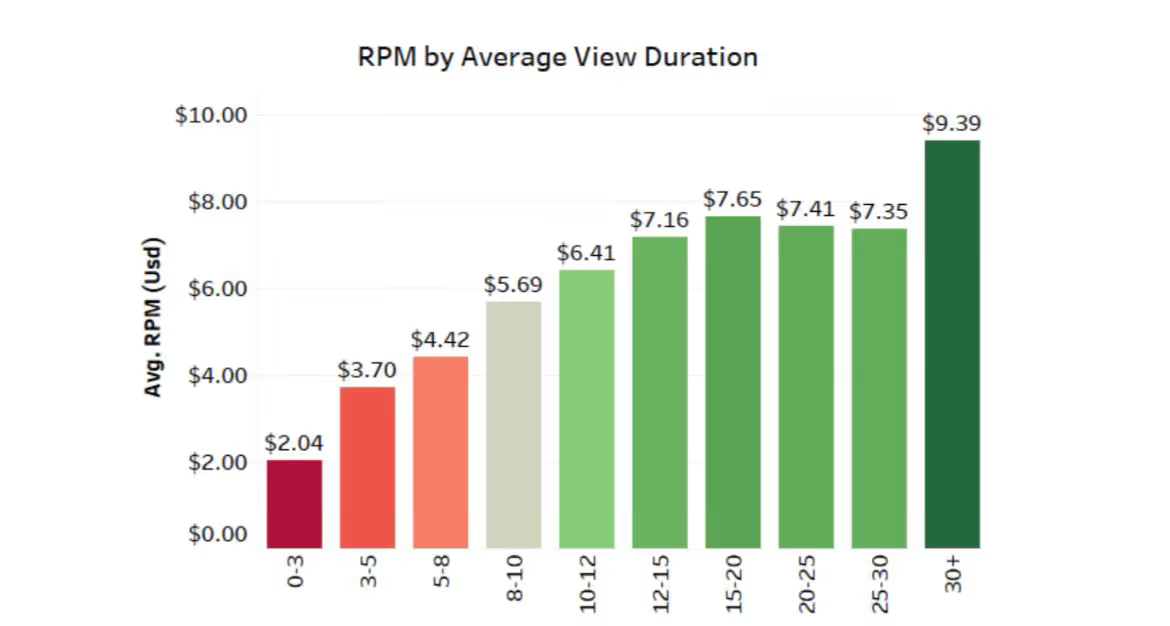
YouTube viewer intent comparison showing high monetization niches versus low RPM entertainment content for beginners

One of the biggest traps beginners fall into is chasing subscriber numbers instead of understanding viewer intent. Subscribers look impressive, but advertisers don’t pay YouTube creators based on how many people click “subscribe.” They pay based on what viewers are interested in buying or researching.

That’s why you’ll often see smaller channels earning more than much larger ones. A comedy channel with 200,000 subscribers can struggle to generate meaningful income, while a finance or software channel with 10,000 subscribers can earn consistently every month. A personal vlog might require years to see returns, while a tutorial channel can monetize within weeks of publishing its first videos.

The difference is commercial intent.

High-monetization niches attract viewers who are actively searching for solutions, comparing options, and preparing to spend money. These viewers don’t just watch, they click, research, and buy. Low-monetization niches attract viewers who want to relax, be entertained, or pass time. Those viewers are valuable for views, but they rarely interact with ads or affiliate links.

As a beginner, you don’t yet have brand authority or mass trust. That means you need a niche that does the heavy lifting for you, one where the audience’s intent naturally aligns with monetization.

How to Turn Viewer Intent Into Views, Watch Time, and Revenue:

A practical way to lock in high-intent viewers is to build your video titles around “when / why / how” situations. Instead of aiming for broad keywords, aim for specific moments a viewer is experiencing. For example, “How to budget” is broad. “How to budget when your income changes every week” is specific, and it attracts someone who is more likely to watch longer because the video is about their exact situation.

Also, don’t rely only on YouTube suggestions, use YouTube search itself. Type your niche topic and look at autocomplete suggestions. Those phrases are literal demand signals from real viewers. Build around those phrases, and you’ll create content that is naturally monetizable because it attracts people who are already problem-aware.

Another strategy is to design your channel like a “ladder.” Your early videos should answer beginner questions (easy traffic), your middle videos should compare options (high conversion), and your later videos can be deeper guides (authority + retention). This ladder approach helps you earn even while you’re small, because comparison and decision-stage videos can make money from affiliate clicks before you ever have big subscriber counts.

Personal Finance (Even Without Being an Expert)

Personal finance is one of the most forgiving high-RPM niches on YouTube, especially for beginners who approach it honestly. Many people avoid this niche because they think they need credentials, years of experience, or advanced investing knowledge. In reality, beginner finance content often performs better than expert-level advice.

What audiences respond to most is relatability. Viewers want to hear real stories from people who are learning, struggling, improving, and making mistakes, just like them. When you share personal experiences with budgeting, debt, saving, or financial discipline, you build trust naturally. You don’t need to teach people how to become wealthy; you just need to show what actually works in real life.

This is also a niche where storytelling matters more than presentation. A simple video explaining how tracking expenses changed your habits can outperform polished videos filled with jargon. People trust transparency more than perfection, especially in money-related topics.

Advertisers love this niche because viewers are constantly researching banks, credit cards, apps, investment platforms, budgeting tools, and online services. That competition pushes ad rates higher, which means you can earn more per view than in most entertainment niches.

From a content creation standpoint, finance is flexible. Screen recordings, voiceovers, faceless videos, and simple slides all work extremely well. You don’t need flashy visuals or high production value. Clear explanations and honest insights are what keep viewers watching.

Most beginners fail in finance only when they try to sound like experts instead of learners. When you document your journey instead of preaching, personal finance becomes one of the most beginner-friendly paths to monetization on YouTube.

How Beginners Win in Finance Without Being an “Expert”:

A strong beginner angle is “progress content.” Instead of teaching, you show your process: how you track spending, how you use a budgeting sheet, how you reduce impulse buys, or how you paid off a small debt. This lets you avoid sounding like a financial advisor, while still providing value. People love real numbers and real lessons. You can also create “before/after” episodes - before: messy spending; after: a simple rule you followed. Those videos keep viewers watching because the story has a payoff.

To monetize sooner, include “decision-stage” videos early. Examples are credit card comparisons (without giving advice, just explain features), budgeting app comparisons, or “Is X worth it?” breakdowns. These naturally fit affiliate links and high-value advertisers. Keep it ethical: explain what you personally use, what each option is good for, and who should avoid it.

A retention strategy that works well in finance is to open with a specific pain point (“I was always short on money by day 18 of the month…”) and then promise a simple framework (“Here’s the 3-step fix I use now.”). Finish with a small next step (“If you want, I’ll share my exact tracker template in the next video.”). That creates a loop and increases returning viewers, which helps the algorithm trust your channel sooner.


Earn from Your
First YouTube Video!

Join over 4,500+ satisfied DFY Dave customers, entrepreneurs, creators & companies worldwide!

Software Tutorials & Online Tools

Software tutorials and online tools are among the easiest niches to monetize early because the audience already knows what they want. When someone searches for a tutorial, they’re not casually browsing, they’re actively trying to solve a problem. That makes this niche extremely valuable from a monetization standpoint.

Viewers searching for how to use Canva, Notion, CapCut, ChatGPT, Excel, or Google Docs are often at a decision-making stage. They want to learn quickly, avoid mistakes, and use the tool more effectively. This creates strong viewer retention and high advertiser interest, especially from SaaS companies that pay premium rates for ad placement.

Beginners often think they need to master an entire tool before making content. In reality, success in this niche comes from narrowing focus. One feature, one problem, one solution per video is enough. Explaining something clearly for beginners is often more valuable than advanced tutorials that overwhelm viewers.

Another major advantage is evergreen traffic. A well-made tutorial can continue generating views and income for years without needing updates. Unlike trends or entertainment content, software tutorials don’t rely on constant uploads to stay relevant.

This niche also removes a lot of performance pressure. You don’t need to show your face, tell stories, or entertain. A clean screen recording paired with a calm, clear explanation is more than enough. For beginners who prefer structure and logic over creativity, this niche is one of the most reliable monetization paths on YouTube.

How to Grow a Tutorial Channel Faster Than Everyone Else:

The fastest way to grow here is to build “micro-tutorials” that solve one frustrating issue. People don’t search for “Notion tips.” They search for “Notion template not working,” “how to make a Notion dashboard,” or “CapCut export blurry.” Those small problems create high watch time because viewers want the fix. Make your tutorial short, direct, and structured: show the problem, show the steps, show the final result, then repeat the key step once. That repetition might feel unnecessary, but it reduces confusion and improves satisfaction - two things YouTube rewards.

To monetize sooner, prioritize videos that include a natural product decision. For example, “free vs paid plan,” “best settings,” “top alternatives,” or “which tool should you use for X.” Those videos attract viewers who are already comparing options and often ready to subscribe or buy. Even if you’re not pushing affiliates, the ad rates tend to be higher because advertisers want those viewers.

A simple strategy for evergreen traffic is to create a “series path.” Video 1: beginner setup. Video 2: common mistakes. Video 3: advanced workflow. Then link them naturally inside your scripts (“If you’re starting from zero, watch my setup video first.”). This increases session time and helps your channel earn more per viewer.

Health Education (Without Medical Claims)

Health is a sensitive niche, but when handled correctly, it is one of the most profitable and stable long-term options for beginners. The key is understanding the line between education and medical advice. Successful beginner health channels focus on explaining how the body works, how habits affect well-being, and why certain symptoms are common - without diagnosing or prescribing treatment.

Viewers in this niche are often dealing with discomfort, fatigue, stress, or lifestyle challenges. They are searching for understanding, not miracles. When you explain concepts clearly and responsibly, you build trust while staying within safe boundaries.

Health advertisers spend heavily because the audience has strong intent. People watching health-related content are more likely to engage with ads, products, and educational resources. This makes RPMs higher than average, even for relatively small channels.

Content creation is also beginner-friendly. Voiceovers, stock footage, slides, and faceless visuals work extremely well. You don’t need personal footage or dramatic storytelling. The most successful beginner channels sound like helpful educators who want to inform, not impress.

The biggest mistake beginners make in this niche is trying to sound like doctors. When you stay respectful, educational, and grounded, health content can generate consistent income while building long-term authority.

How to Make Health Content That Builds Trust and Still Monetizes:

A smart beginner approach is to focus on “everyday health explanations” that avoid medical claims but still feel extremely useful. Think routines, habits, and common experiences: fatigue after lunch, brain fog, stress tension, sleep inconsistency, hydration, posture, and mobility. These topics are safe because you can explain general concepts and suggest talking to a professional for personal concerns, without making promises.

Retention improves when you structure health videos like a “myth vs reality” story. Start by naming a common belief (“Most people think they’re tired because they’re lazy…”) then reveal a more grounded reason (“It’s often sleep debt, stress, or dehydration.”). Viewers keep watching because the video feels like it’s correcting something important.

For monetization, consider how to naturally tie your videos to resources without turning them into sales pitches. For example, if you explain sleep, you can link to a sleep tracker app or a simple routine template. If you explain posture, you can link to a stretch guide or equipment review. The key is trust: explain why you recommend something, who it helps, and who it doesn’t. In health, credibility is the product, so never rush the pitch.

Make Money Online (With Proof, Not Hype)

Faceless illustration showing data-driven make money online strategy with income charts, testing results, and realistic online business analytics for beginners

The make money online niche has a reputation problem, but that’s exactly why honest beginner creators can stand out quickly. This niche fails when creators exaggerate results and promise unrealistic outcomes. It succeeds when creators stay grounded, transparent, and realistic.

Beginner creators perform best when they test platforms honestly, explain what worked and what didn’t, and openly share mistakes. Viewers in this niche are searching for opportunities, but they are also skeptical. When you remove hype and focus on clarity, trust builds faster.

This niche attracts viewers who are highly monetizable because they are willing to invest in tools, education, and systems, if they believe the source is credible. Even small channels can earn well if they position themselves as realistic guides instead of motivational speakers.

Screen-recorded breakdowns, platform reviews, and case studies work especially well here. You don’t need fancy production or dramatic storytelling. Calm explanations and real numbers outperform flashy claims every time.

How to Stand Out in Make Money Online Without Sounding Like a Guru:

Your biggest advantage here is being the “anti-hype” creator. Instead of promising outcomes, frame content as experiments: “I tried X for 14 days,” “I tested three platforms,” “Here’s what actually happened.” This instantly increases trust because viewers feel you’re not selling dreams - you’re sharing reality. In the script, use a simple proof structure: what you did, the time invested, the result, what you’d change, and who it’s best for. This format is repeatable and builds authority fast.

To monetize earlier, focus on content that naturally introduces tools: editors, AI tools, marketplaces, automation platforms, website builders, analytics tools, and training resources. But don’t drop links without context. Explain your selection logic so viewers feel guided, not pitched. When you do this well, affiliate clicks increase because the recommendation feels earned.

Another strategy is to create “beginner protection” videos: scams to avoid, unrealistic niches, RPM myths, and common mistakes. Those videos get shared, build trust, and attract a serious audience. Once people trust you, they’re far more likely to buy through your links or follow your CTA to deeper guidance.

Product Reviews (Without Showing Your Face)

Product reviews remain one of the fastest monetization paths for beginners because they target viewers who are already close to buying. The mistake beginners make is reviewing random products without a clear focus. Successful channels choose a category, understand a specific problem, and review solutions that address that problem.

Faceless review channels work extremely well using stock clips, B-roll, screenshots, and voiceovers. Viewers care far more about clarity and honesty than about seeing the creator on camera. When reviews are structured, balanced, and helpful, trust builds quickly.

This niche benefits heavily from affiliate income, high CPM ads, and comparison-based content. Even a single video ranking for a buyer-intent keyword can outperform an entire entertainment channel in revenue.

Consistency matters more than personality here. Channels that stay focused and transparent often scale faster than creators who try to be entertaining.

How to Make Review Videos That Rank and Convert:

To win fast, don’t review “popular products.” Review “decision products.” That means products people actively compare before buying, like microphones, editing tools, laptops, productivity apps, or subscriptions. Structure your reviews around real-world use cases: who it’s for, who should avoid it, what problem it solves, and the one feature that matters most. This keeps the video from becoming generic and helps it rank for searches like “is X worth it” and “X vs Y.”

A powerful retention tactic is to tease the final verdict early (“I liked it, but there’s one issue that might be a deal-breaker for you…”). Then deliver the deal-breaker near the end. That simple narrative hook increases watch time without needing clickbait.

To improve conversions, match your affiliate links to the video’s intent. If the video is “X vs Y,” include both links and a short note about which viewer should choose which. If it’s “best budget option,” include one primary link and one alternative. The goal isn’t to spam links - it’s to make the decision easier. When viewers feel helped, they click.

Educational Explainers (Simple > Smart)

YouTube favors clarity over complexity. Beginner explainer channels succeed when they simplify ideas instead of trying to sound intelligent. Viewers reward videos that make them feel smarter without making them feel confused.

This niche is ideal for creators who enjoy learning and teaching. Psychology basics, everyday science, simple history, and “why does this happen” topics all perform well. Over time, these channels build authority and stable monetization through ads and sponsorships.

The content style is forgiving and low pressure. Script-based, faceless videos allow beginners to focus on research and explanation rather than performance.

How to Make Explainer Videos That Keep People Watching:

A simple strategy is to start every explainer with a relatable question and a quick promise. People click explainers when they feel confused or curious. If you open with a clear promise (“By the end of this video, you’ll understand why…”) you increase retention because viewers know there’s a payoff. Then keep the explanation in “layers”: start with the simplest version, then add one deeper detail, then give one example. This prevents viewers from dropping because the content feels too dense.

Monetization improves when your topics are “useful explainers,” not just interesting ones. For example, instead of only explaining a historical event, you connect it to a modern lesson. Instead of only explaining a psychology concept, you show how it affects everyday decisions. Useful topics attract advertisers and sponsors because they feel practical.

For growth, build connected topics. If one video is “Why habits are hard to change,” the next is “How to make habits stick,” and then “Why motivation disappears.” This creates binge-watching, which is extremely powerful for small channels because one viewer turns into multiple views in one session.

YouTube & Content Creation Education

Teaching YouTube while learning YouTube is one of the most effective beginner strategies. Documenting what you test, what works, and what fails builds credibility naturally. You don’t need authority - you need honesty and consistency.

This niche attracts a high-value audience of creators who invest in tools, services, and education. That makes monetization easier as the channel grows.

How to Build Authority as a Creator While You’re Still Learning:

The fastest path in this niche is to create content around “before/after tests.” Don’t just explain theory - run small experiments and show what changed. For example: changing titles, thumbnails, video length, hooks, or upload times. Even if your channel is small, people value real tests because most creators are desperate for clarity. This also gives you endless content ideas because every change you test becomes a video.

Another strategy is to build your channel around a repeatable framework: hooks, retention, packaging, and monetization. If you consistently talk about these pillars, viewers start seeing you as a reliable voice, not just another tip channel. That consistency builds trust, and trust drives monetization - especially if you later offer channel reviews, consulting, or templates.

Finally, focus on “beginner clarity” videos: what to do first, what not to do, what matters most, and what myths are wasting time. Beginners share those videos and return for guidance, which increases your returning viewer ratio - one of the strongest signals YouTube can get from a small channel.

Overview of high RPM YouTube niches for beginners including finance, software tutorials, health education, product reviews, and online income

Final Thoughts: Monetization Is a Strategy

Most beginners don’t fail because they lack talent. They fail because they choose niches that don’t reward beginners. When you choose a niche with buyer intent, clear problems, and advertiser demand, you give yourself a real chance to succeed.

Your Next Moves If You Want Faster Results:

If you want a practical way to choose, don’t pick a niche first - pick a “viewer problem.” The best beginner channels are problem-focused. Once you pick the problem, you can build 10-20 videos that solve it from different angles, and your niche naturally forms around that. Also, commit to one monetization path early so your channel grows in the right direction. For example, if you want affiliate income, you should create comparison and “best for” videos early. If you want ad revenue, you should create evergreen tutorials and explainers. If you want services or reviews, you should document your process and show proofs.

The biggest long-term strategy is consistency in positioning, not just consistency in uploads. When viewers know exactly what your channel helps them do, they return. And when viewers return, YouTube trusts you more. That trust is what eventually turns views into stable revenue.

High-Impact Moves That Change Everything:

  • Choose a niche with buyer intent
  • Create solution-based videos, not broad topics
  • Publish a mix of beginner + comparison videos
  • Use series paths to increase binge-watching
  • Build trust first, then monetize harder

Digital Products for
Fast Growing Businesses

Join over 4,500+ satisfied DFY Dave customers, entrepreneurs, creators & companies worldwide!

Check All Services
Talk To Sales